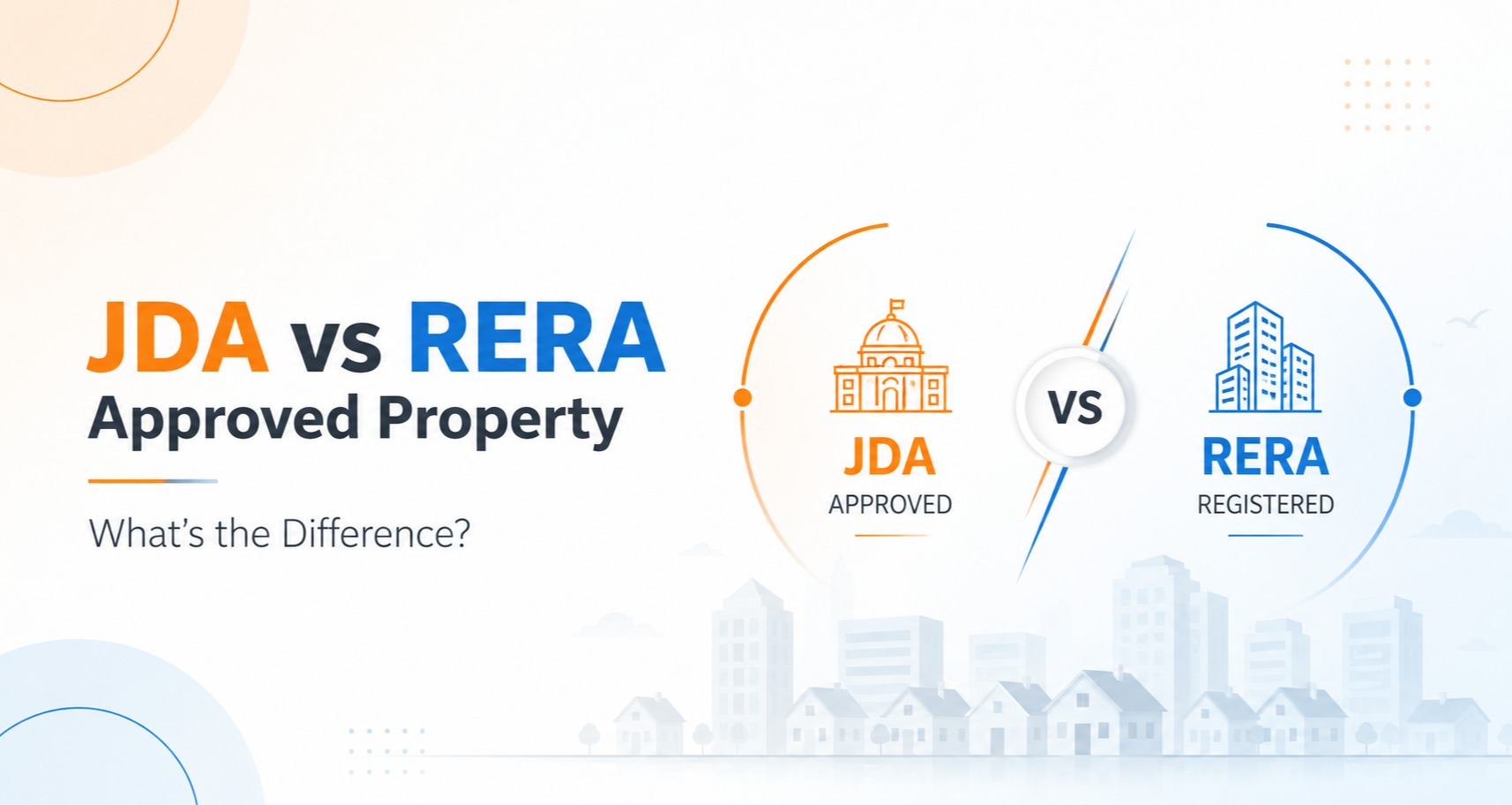
JDA vs RERA Approved Property: What's the Difference?
Real Estate Guide • 02 Jul 2026
Confused about the difference between JDA Approved and RERA Registered properties? This guide explains what each approval means, their key differences, and why verifying both is important before investing in a plot or property in Jaipur. Make informed real estate decisions with confidence.
JDA vs RERA Approved Property: What's the Difference? A Complete Guide for Property Buyers
Buying a property is one of the most significant financial decisions in life. Whether you're purchasing a residential plot, commercial land, or investing in a township, ensuring the property is legally approved is essential. Two terms that buyers often come across are JDA Approved and RERA Registered. Many people mistakenly believe these terms mean the same thing, but they serve different purposes.
Understanding the difference between JDA approval and RERA registration can help you avoid legal issues, protect your investment, and make an informed decision.
What is JDA Approval?
JDA stands for Jaipur Development Authority, the government body responsible for planning and regulating urban development in Jaipur. When a property is JDA approved, it means the land layout, roads, infrastructure, zoning, and development plans have been reviewed and approved according to the city's planning regulations.
A JDA-approved property generally offers buyers greater confidence regarding planned development and compliance with local authority norms.
Benefits of Buying a JDA Approved Property
- Planned road connectivity and infrastructure
- Legal land use approval
- Better chances of bank loan approval
- Higher resale value
- Reduced risk of disputes related to unauthorized layouts
- Better long-term investment security
What is RERA Registration?
RERA stands for the Real Estate (Regulation and Development) Act, 2016, introduced by the Government of India to improve transparency and accountability in the real estate sector. Under this law, eligible real estate projects must be registered with the respective State RERA authority before they are marketed or sold.
RERA protects buyers by requiring developers to provide project details, adhere to timelines, and maintain transparency throughout the development process.
Benefits of RERA Registered Projects
- Greater transparency in project information
- Protection against unnecessary project delays
- Accountability of developers
- Better consumer grievance redressal
- Clear information about project approvals and timelines
- Improved buyer confidence
JDA vs RERA: Understanding the Difference
Although both are important, JDA approval and RERA registration are not substitutes for each other.
JDA approval focuses on whether the land and layout comply with local development regulations. It deals with planning, infrastructure, land use, and permissions required for development.
RERA, on the other hand, focuses on protecting buyers by regulating eligible real estate projects. It ensures developers follow legal procedures, disclose project information honestly, and complete projects within committed timelines.
In simple terms:
- JDA regulates the land and development planning.
- RERA regulates the real estate project and safeguards buyers' interests.
Should You Buy Only a JDA Approved Property?
Buying a JDA-approved property is generally considered a safer option because the land has been approved for development according to local planning rules. However, buyers should still verify ownership documents, approvals, and other legal records before making any purchase.
Is RERA Registration Alone Enough?
RERA registration provides transparency and legal protection for eligible projects, but it does not replace local development approvals. Buyers should ensure that the project has the necessary approvals from the relevant authority, such as JDA, wherever applicable.
Checking both approvals offers greater confidence and reduces investment risk.
Documents Every Property Buyer Should Verify
Before investing in any property, make sure you verify:- JDA Approval (where applicable)
- RERA Registration (for applicable projects)
- Sale Deed
- Title Documents
- Encumbrance Certificate
- Land Conversion Documents (if applicable)
- Bank Loan Approval Status
- Development Permissions
- Identity of the Developer
Proper verification helps avoid future legal complications and ensures a safer investment.
Common Mistakes Buyers Should Avoid
Many property buyers make avoidable mistakes, such as:- Purchasing property only because it is offered at a low price.
- Not verifying government approvals.
- Ignoring legal documentation.
- Believing verbal promises without written proof.
- Not visiting the project site before booking.
- Failing to research the developer's track record.
Avoiding these mistakes can save both money and unnecessary legal hassles.
Why Legal Approval Matters
Investing in legally approved property not only protects your ownership rights but also increases the chances of better appreciation and resale value in the future. Banks are also generally more comfortable financing properties with proper approvals, making transactions smoother.
Whether you are buying your first residential plot or making a long-term investment, checking the legal status of the property should always be your first priority.
Conclusion
Understanding the difference between JDA Approved and RERA Registered properties is essential for every property buyer. While JDA approval ensures that the land complies with local planning and development regulations, RERA registration promotes transparency and accountability in eligible real estate projects.
Neither approval should be viewed as a replacement for the other. Instead, buyers should verify all applicable approvals, carefully review legal documents, and conduct proper due diligence before investing.
A well-informed decision today can protect your investment, provide peace of mind, and help you build long-term wealth through real estate.